Smiley Kitten: A Handwritten Font That Brings Warmth to Your Brand Materials
If you run a small business, every piece of customer-facing material says something about who you are. Your logo, your product labels, your social media posts, your packaging, even the menu at your café or the flyer you leave at the counter — they all work together to build a feeling. That feeling is your brand. And the typeface you choose is one of the quickest ways to communicate it.
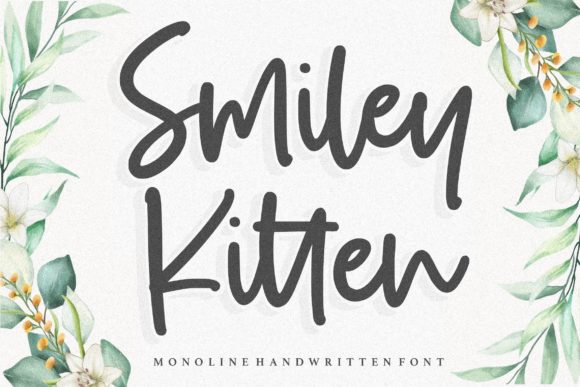
Smiley Kitten is a handwritten font that feels like a friendly note from a trusted person. It has a natural, sweet, and approachable style. It is not stiff or overly polished. It looks like something a thoughtful person wrote by hand, which makes it perfect for brands that want to feel personal, warm, and genuine. In a world of automated templates and corporate visuals, a font like this can help you stand out by being simply human.
What Smiley Kitten Does for Your Brand Identity
Brand identity is not just about a logo. It is about consistency across every touchpoint. When you use the same handwritten font on your product labels, your website banner, your Instagram story, and your thank-you card, your business starts to look intentional. Customers notice that coherence, even if they do not say it out loud. They feel like they are interacting with a real brand, not a hobby project.
Smiley Kitten works well as a display font — the kind you use for headlines, logos, and short phrases that need to grab attention. Its friendly curves and natural spacing make it readable enough for smaller applications too, such as a tagline on a business card or a product name on a label. That versatility is important when you are a small business owner who cannot afford to buy a different font for every project.
This script font brings a handmade quality to your materials without requiring you to actually write everything by hand. You get consistent letterforms every time, which helps your brand look professional while still feeling personal.
Practical Uses Across Your Business
Let me walk you through some realistic ways you might use Smiley Kitten in your day-to-day business materials. These are not hypothetical — these are the exact kinds of projects I have used handwritten fonts for in my own business.
- Product labels and packaging. If you sell handmade candles, bath salts, coffee beans, or beauty products, the label is often the first physical interaction a customer has with your brand. Smiley Kitten on a kraft paper label or a clear glass jar looks intentional and inviting. It tells the customer that the product inside was made with care.
- Logo or wordmark. For a bakery, a boutique, a stationery shop, or a coaching business, a handwritten logo can feel far more approachable than a rigid serif or a generic sans serif. Smiley Kitten has enough personality to stand alone as a wordmark, especially when paired with a simple icon or symbol.
- Café menus and signage. Whether you run a small coffee shop or a food truck, your menu should be easy to read and visually pleasant. Smiley Kitten works beautifully for menu headers and item names. Pair it with a clean sans serif font for descriptions and prices, and your menu becomes both friendly and functional.
- Social media graphics. On Instagram and Pinterest, fonts need to be readable at small sizes on mobile screens. Smiley Kitten holds up well for short quotes, product announcements, and sale graphics. It gives your posts a consistent look without requiring you to be a graphic designer.
- Thank-you cards and stickers. These are the small touches that turn one-time buyers into repeat customers. A handwritten-style thank-you card with your logo printed in Smiley Kitten feels like a personal note, even if you printed fifty of them.
- Website banners and headers. On your homepage or landing page, a headline set in Smiley Kitten can set the tone before a visitor reads a single word. It signals warmth and friendliness immediately.
- Digital ads and flyers. Whether you are running a Facebook ad or designing a promotional flyer to hand out at a market, Smiley Kitten helps your message feel human. That can be the difference between someone scrolling past or stopping to read.
When to Use Smiley Kitten as Your Lead Font
Not every font should be used for everything. Smiley Kitten shines when it is used as a headline, logo, or accent font. It is expressive enough to carry the visual weight of your brand name or a key phrase, but it works best when you let it take the spotlight in short bursts. Use it for your business name, your product names, your main Instagram quote, or the header on your website. For longer paragraphs, product descriptions, or body text, you will want to pair it with a simpler companion font.
That is a common and effective strategy in modern typography. You let the expressive creative font do the talking in the big moments, and you let a neutral serif font or sans serif font handle the reading parts. Your brand stays visually interesting without becoming exhausting to read.
Font Pairing Ideas That Work with Smiley Kitten
When you pair a handwritten typeface like Smiley Kitten with another font, you want contrast. The handwritten font brings personality, and the second font brings clarity and balance. Here are a few pairings I have tested in my own projects.
- Smiley Kitten with a clean sans serif. A simple sans serif like Lato, Open Sans, or Montserrat keeps things modern and readable. Use the sans serif for body text, prices, contact information, and longer product descriptions.
- Smiley Kitten with a classic serif. A readable serif such as Merriweather, Playfair Display, or Cormorant Garamond adds a touch of elegance. This pairing works especially well for beauty brands, stationery shops, and lifestyle coaching businesses.
- Smiley Kitten alone on packaging. Sometimes less is more. If your product packaging is minimal, using Smiley Kitten as the only typeface can create a clean, cohesive look. Just be sure your text is short and your sizing is generous enough to remain readable.
Test your pairings before committing. Print a label at actual size. Look at a social media mockup on your phone. Show it to a friend or customer and ask what feeling they get. The right combination will feel natural, not forced.
Readability in Real Business Settings
One concern I hear from other business owners is whether a script font or handwritten font will be readable in practical applications. The answer depends on how you use it. Smiley Kitten has good natural spacing and clear letterforms for a handwritten style, which helps it work at reasonable sizes. But you should still test it in your specific use case.
For small labels, like a 1-inch round sticker on a lip balm, use Smiley Kitten for the brand name only and keep the rest of the text in a simpler font. For mobile screens, make sure your headline is large enough to be read without zooming. For printed menus, use it for category headers and item names, not for long descriptions. When you treat it as a premium font for special moments, readability will not be a problem.
Building Trust Through Consistent Typography
When customers see the same typeface across your packaging, your website, your social media, and your printed materials, they start to recognize you. That recognition builds trust. Trust is what makes someone choose your product over a competitor's, even when the price is slightly higher or the shipping takes a day longer.
Smiley Kitten can be the thread that ties all your materials together. Your logo uses it. Your product labels use it. Your Instagram posts use it. Your thank-you cards use it. Over time, that font becomes part of your brand identity. Customers associate its friendly, natural style with your business. That is the kind of consistency that turns a small shop into a recognizable brand.
One Practical Step Before You Commit
Before you use Smiley Kitten across your entire brand, test it in a few real-world scenarios. Create a mockup of your product label. Design a single Instagram post. Print a business card. See how it looks in the actual context where your customers will see it. Does it feel right? Does it match the personality you want your business to convey? Does it work at the sizes you need?
I have made the mistake of choosing a font that looked great on my computer screen but felt too playful on a printed label. Testing early saves time and money. Smiley Kitten is flexible enough to work in many settings, but your specific application matters.
Checking Commercial Licensing for Your Products
One thing every business owner needs to consider before using any commercial font is the licensing agreement. Smiley Kitten is a font that likely comes with specific terms regarding how you can use it in your business. Some fonts allow unlimited commercial use. Others require an extended license if you plan to use the font on physical products for sale, on merchandise, in templates you sell, or in client work.
Before you print labels, design packaging, or create digital products for sale, read the license that came with your purchase. If you are unsure, contact the foundry or marketplace where you bought it. It is a small step that protects your business and respects the work of the type designer. Using a font without proper licensing can cause legal headaches later, especially if your business grows and your products reach a wider audience.
The Bottom Line on Smiley Kitten
Smiley Kitten is the kind of script amp that brings warmth without sacrificing professionalism. It helps small businesses look consistent, approachable, and intentional across all their customer-facing materials. Whether you are designing a logo for your boutique, labeling handmade products, creating social media content, or building a website, this handwritten font gives you a friendly voice that customers will remember.
Pair it wisely, test it early, and use it consistently. Your brand will thank you.